What happens if your SR-22 policy lapses
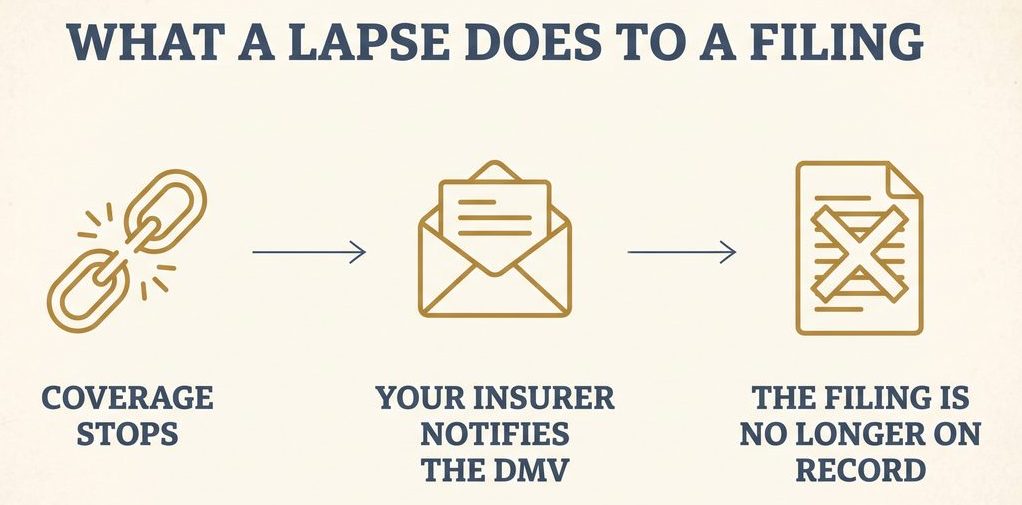
The single worst thing that can happen during an SR-22 period isn't a rate increase — it's a lapse. Here's the exact chain of events, because knowing it is the best motivation to never let it start.
The chain reaction
- Your policy cancels — missed payment, expired card, non-renewal you didn't notice.
- Your insurer files an SR-26 with the DMV. This isn't optional for them; it's required. The DMV now knows you're uninsured.
- The DMV can suspend your license again — often effective the date coverage ended, not the date you found out.
- Your requirement can restart. Depending on your case, time served toward the three years may not count. A lapse in month 30 can put you back at month zero.
- Driving in the gap is uninsured driving — new violations, new penalties, and a much harder insurance market afterward.
If it already happened
Move fast — the damage compounds with time. Get a new policy with an SR-22 filing the same day if possible (carriers can file electronically). Then contact the DMV to confirm your reinstatement steps and any fee. The faster coverage resumes, the stronger your case that the gap was brief.
For the rules across California, see the Auto World Insurance Services page on SR-22 insurance.
How to make a lapse impossible
- Autopay, always — and a calendar reminder a week before renewal to confirm the card on file still works.
- Never cancel old coverage before new coverage is active when switching carriers — the new SR-22 files first, then the old policy ends.
- Tell your agent before money gets tight. Payment-plan changes and coverage adjustments exist; an SR-26 has no undo button.
The renewal date is the other risk
Most lapses are not dramatic. They come from a card that expired, an address change that sent the renewal notice somewhere else, or a payment plan that ended without anyone noticing. Because the filing follows the policy, a purely administrative lapse does the same damage as a deliberate cancellation. Two small habits remove nearly all of that risk: keep the payment method current, and set your own reminder ahead of every renewal rather than relying on a notice arriving.
What reinstating actually involves
Restarting after a lapse is rarely just paying the missed premium. The carrier may treat it as a new policy rather than a reinstatement, which means fresh underwriting, on a driving record that may now show the suspension. The DMV side has its own steps, and the filing has to be made again. None of that is insurmountable, but it is several days of paperwork rather than a phone call — which is the practical argument for treating the payment date as immovable in the first place.
Get this quoted for your situation
Free quotes from multiple carriers, prepared by a licensed California agent. Two minutes, no obligation.
Get My SR-22 QuotesQuick answers
Will the DMV know if my SR-22 policy cancels?
Yes — your insurer is required to file an SR-26 notice when the policy ends. There is no quiet lapse.
Does a lapse restart my three-year requirement?
It can, depending on your case — some drivers lose credit for time served. Even when it doesn't restart, the re-suspension and reinstatement fees make a lapse expensive.
How fast can I fix a lapse?
Same day, often — carriers file SR-22s electronically. The priority is getting coverage active immediately, then squaring reinstatement steps with the DMV.