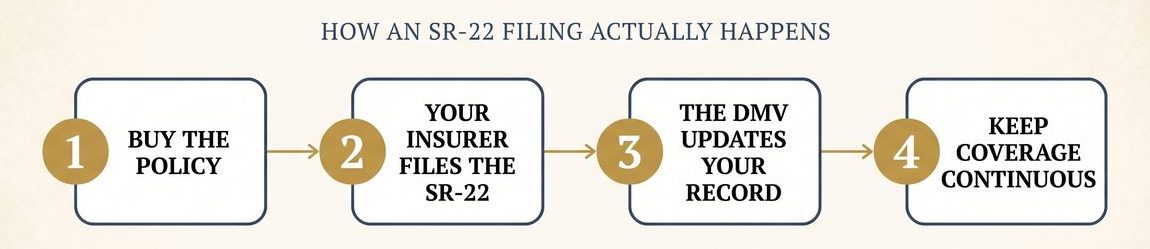
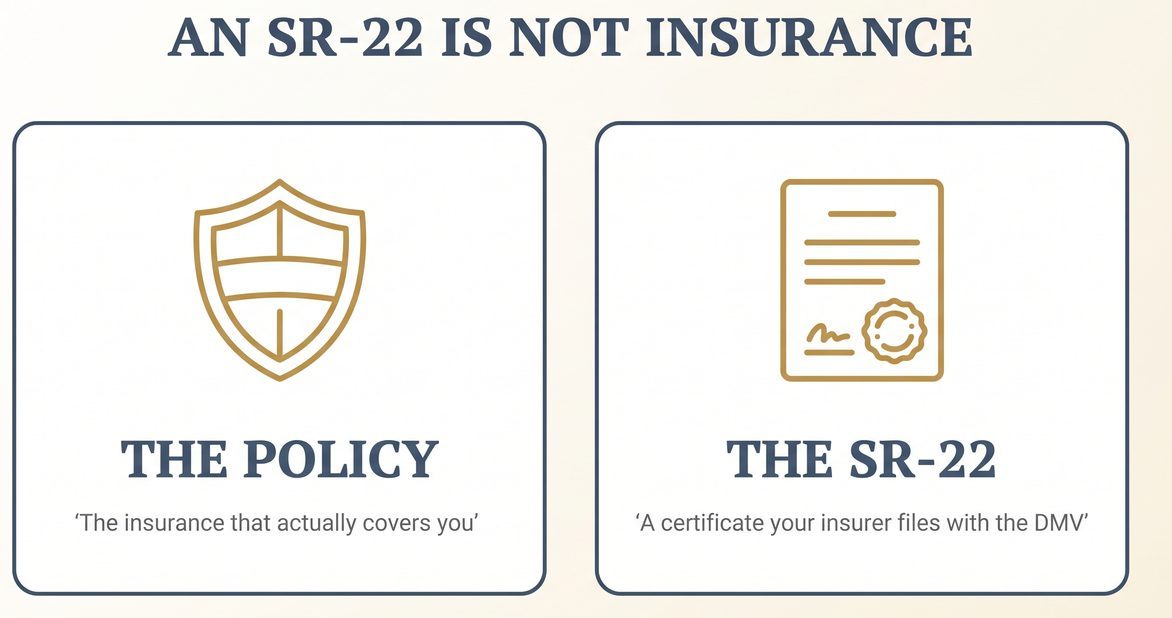
An SR-22 isn't insurance — it's a form your insurer files with the California DMV proving you carry minimum coverage. The catch: carriers price SR-22 situations very differently, so who you file with decides what you pay.
A certificate of financial responsibility your insurer files with the DMV — proof you carry California's minimum liability coverage.
Usually after a DUI, driving uninsured, an at-fault accident without coverage, or to reinstate a suspended license.
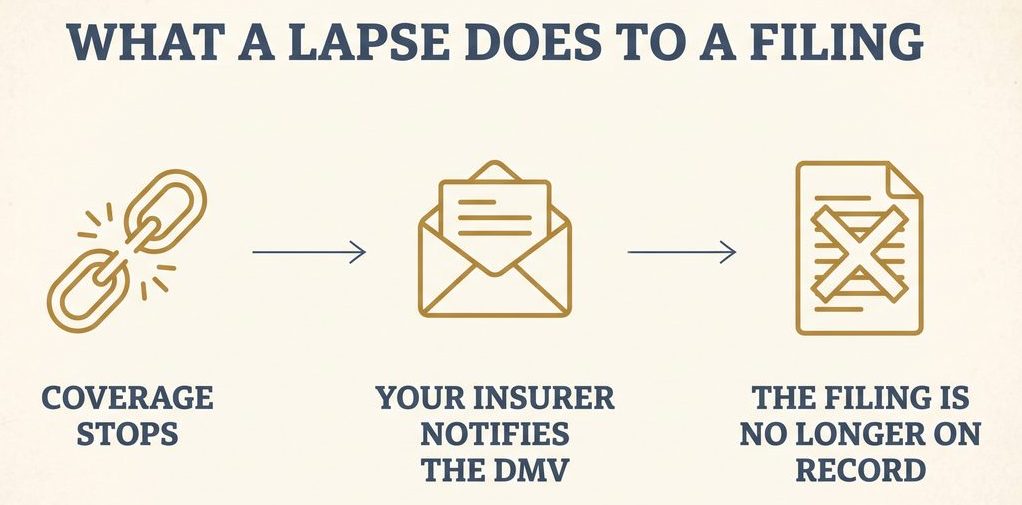
Typically 3 years in California. A coverage lapse gets reported to the DMV and can restart the clock — continuous coverage is everything.
Free · Carriers that work with SR-22 drivers · Filing handled by the agent
The SR-22 filing itself is cheap — carriers charge a small one-time fee. The real cost is the premium attached to the violation that triggered the requirement, and that's where carriers disagree wildly. Some companies treat a DUI as a near-dealbreaker; others specialize in exactly these situations and price them surprisingly reasonably.
That spread means SR-22 drivers gain more from comparing carriers than almost anyone else on the road. Filing with the wrong company can cost hundreds more per year — for the exact same coverage and the exact same DMV form.
No car? A non-owner policy with an SR-22 filing satisfies the DMV and covers you when driving borrowed cars — often the cheapest way to meet the requirement.
It's not a type of insurance — it's a certificate of financial responsibility your insurance company files with the California DMV, proving you carry at least the state's minimum liability coverage (30/60/15). You can't file it yourself; it has to come from an insurer.
The filing fee itself is small — typically a modest one-time charge. The real cost is the higher premium tied to whatever triggered the requirement. Because carriers price these situations very differently, comparing several companies matters more here than for any ordinary policy.
Typically three years in California, though the court or DMV sets your specific term. If your policy lapses during that window, your insurer is required to notify the DMV — which can suspend your license again or restart the requirement. Continuous coverage is the one rule that matters.
Yes — a non-owner policy with an SR-22 filing covers you driving vehicles you don't own and satisfies the DMV. It's often the most affordable option for drivers between cars.
No. Our agents handle SR-22 filings all the time — to us it's paperwork, not a character reference. The goal is getting you legally back on the road at the fairest possible price.